Cart is empty
As a parent, there’s a question that never quite leaves you: Is my child ready to face the world?
As a mother raising Indian American children, that question has always come with an added layer. It hasn’t just been about confidence or independence. It’s been about identity. About whether my children understand, deeply and unapologetically, that belonging is not the same as fitting in.
Over the years, through both parenting and my work creating content for multicultural families, I’ve realized something important: the signs that our children are going to be okay are rarely loud or dramatic. They don’t come in big, cinematic moments.
They show up quietly in everyday interactions.
I’ve learned to notice them.
It looks like a child who doesn’t flinch when someone comments on their tan. Instead, they shrug and say, “Yeah, I’m outside a lot. I like it.” There’s no shame tucked into the response. No attempt to shrink.
It looks like a child who hears a remark about their body and responds with ease: “My body helps me do what I love.” There’s no spiral of self-doubt ; just a simple, grounded sense of ownership.
It looks like correcting someone who mispronounces their name. Calmly. Clearly. “It’s actually pronounced like this.” No softening, no discomfort, no apology for taking up space.
It looks like opening their lunchbox and not hiding what’s inside. Instead, they explain it. Maybe even offer it. “This is what I eat at home.” There’s no quiet urge to blend in ust an unspoken comfort with who they are.
It looks like curiosity during festivals. Not just participation, but questions. “Why do we celebrate this?” And more importantly, a genuine interest in the answer.
It looks like a refusal to reduce traditions like Diwali or Holi into neat, one-line explanations. An understanding that there are layers—stories, histories, choices, meaning.
These are the moments I pay attention to.
Because in those small responses is the the freedom to answer, the willingness to question, the absence of hesitation you begin to see something bigger taking shape. You catch glimpses of who your child is becoming.
And that, more than anything, tells me they are going to be okay.
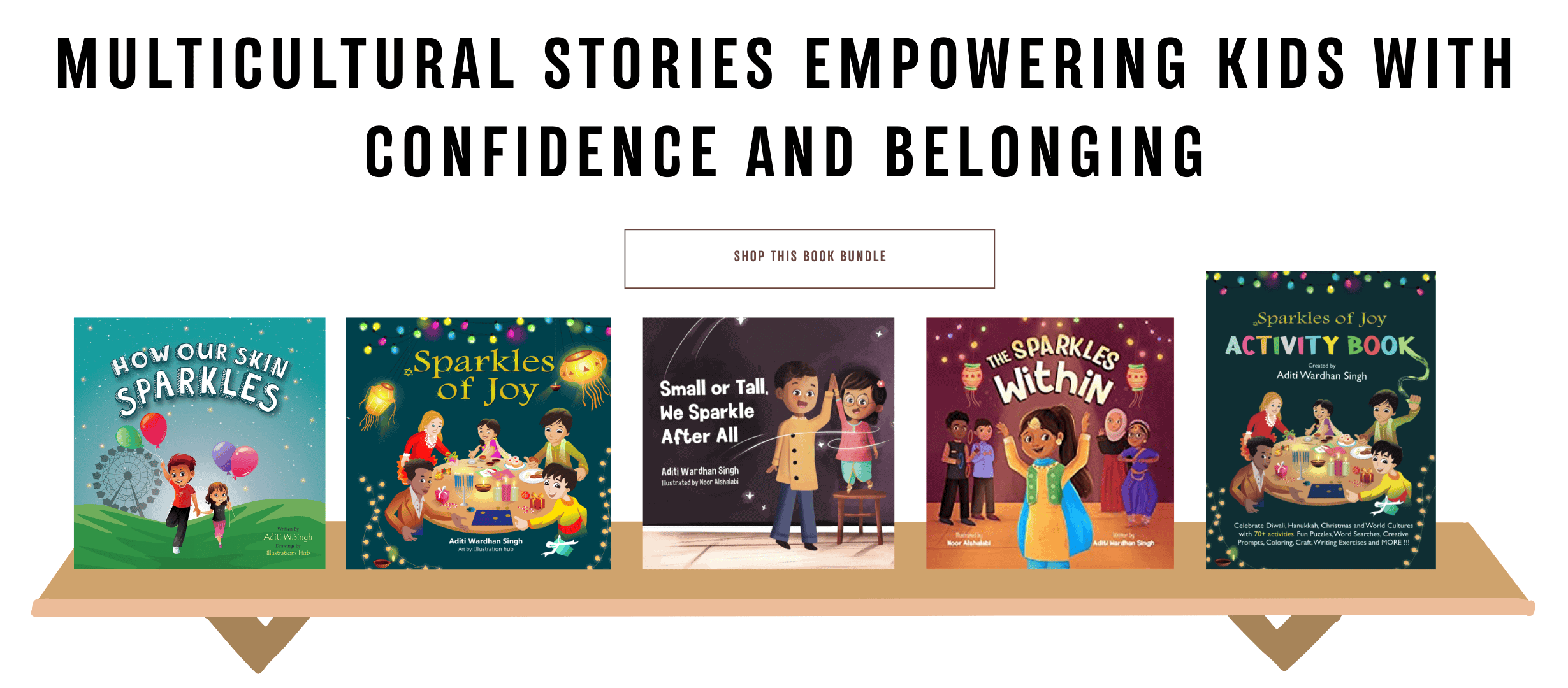
This is exactly why I write the books I do. Not to lecture or simplify identity, but to give children the language they need in these moments. To help them respond with clarity and confidence. And to support parents who are navigating these same questions, often wondering if they’re getting it right.
Because confidence isn’t always loud or attention-grabbing.
Sometimes, it’s simply a child who knows who they are and doesn’t feel the need to explain it.